
Historical Background
Luohu District is the birthplace of the Shenzhen Special Economic Zone and carries deep historical roots that date back to the Ming and Qing dynasties when it belonged to Xin’an County. After Shenzhen became a city in 1979 and a Special Economic Zone was established in 1980, Luohu was the first area to be developed. During the 1980s, the “Shenzhen Speed” was born here with the construction of the Guomao Building, rising one floor every three days. By the 1990s, Luohu served as Shenzhen’s sole urban center, housing the city’s core commercial, financial, and administrative functions. Although newer districts like Futian and Nanshan have emerged as major hubs, Luohu’s historical significance and foundational role in Shenzhen’s rise remain undeniable.
Major Commercial Zones
Dongmen Commercial Area
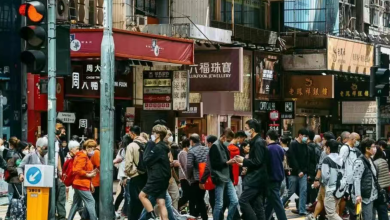
One of Shenzhen’s oldest commercial streets, Dongmen traces back over 300 years to the original “Shenzhen Market.” Transformed into a pedestrian street in 1999, it now sees over 500,000 daily visitors. Known for affordable clothing, street food, and electronics, it represents the city’s grassroots vitality.
Renmin South – Guomao Commercial Zone
Once Shenzhen’s premier commercial district during the 1980s and 90s, this area featured iconic landmarks like Kingglory Plaza and the Guomao Building. Though foot traffic has declined with competition from newer areas, revitalization efforts are underway.
Caiwuwei Financial District
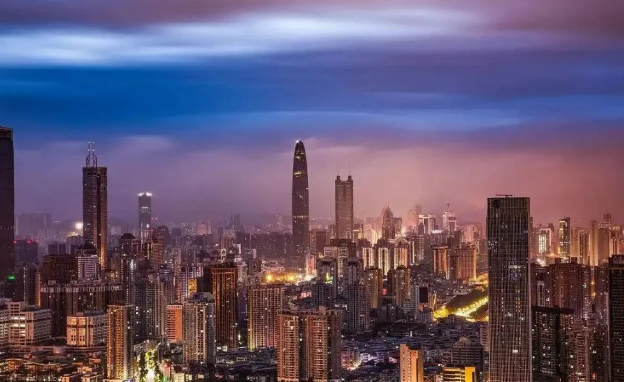
Home to Shenzhen’s earliest CBD, this zone includes landmarks like Shun Hing Square (Diwang Building), once Asia’s tallest in 1996, and KK100, Shenzhen’s tallest building in 2011. Though some financial institutions have relocated to Futian, Caiwuwei remains a vital financial cluster.
Sungang-Qingshuihe Area
Previously Shenzhen’s largest logistics and warehousing base, this area is transitioning into a creative, furniture, and auto-themed business zone with projects like Sungang MixC Food Hall.
Notable Enterprises
Finance:
- Shenzhen Stock Exchange (established in 1990, moved to Futian in 2016; some functions still remain in Luohu)
- Ping An Bank (formerly Shenzhen Development Bank, the first listed bank in China)
Retail:
- CR Vanguard (headquartered in Luohu in its early days)
- Rainbow Department Store (China’s first Sino-foreign joint venture department store, founded in 1984 in Luohu)
Manufacturing:
- Kingway Beer (a once-iconic local beer brand, acquired in 2013)
Media and Others:
- Shenzhen Press Group, headquartered in Luohu, is a major media institution in the city.
Renowned Hotels
Panglin Hotel
Opened in 2000, once one of Shenzhen’s most luxurious hotels, funded by Hong Kong philanthropist Yu Pang-lin.
Shangri-La Hotel, Luohu
Opened in 1992, this was Shenzhen’s first international five-star hotel, located next to Luohu Port.
Furama Hotel
A landmark hotel in the 1990s, known for hosting political and business elites.
Sunshine Hotel
One of the early high-end hotels in Shenzhen, still operating today though its market position has declined.
Yafeng International Hotel
A newly renovated business hotel close to the Caiwuwei Financial District.
How Prosperous Was Luohu in Its Peak?
During the 1980s and 1990s, Luohu was the undisputed center of Shenzhen:
- Commerce: Guomao Building and Rainbow Department Store set consumption trends; Dongmen was packed with shoppers daily.
- Finance: Home to the Shenzhen Stock Exchange and bank headquarters, Caiwuwei was dubbed “Shenzhen’s Wall Street.”
- Hotels: Shangri-La and Furama Hotel were the benchmark for high-end hospitality.
- Border Trade: As the sole land border to Hong Kong at the time (before other ports opened), Luohu Port drove cross-border commerce.
- Culture: Shenzhen Grand Theater and the original Shenzhen Book City served as the city’s primary cultural venues.
Why Did Luohu Decline?
Urban Planning Shifts:
After 2000, Shenzhen’s development shifted westward, focusing on Futian (as the CBD) and Nanshan (as a tech hub). Luohu, with limited land, struggled to expand.
Industrial Migration:
Major institutions like the Shenzhen Stock Exchange moved to Futian; tech enterprises clustered in Nanshan, leaving Luohu with a slower pace of industrial upgrade.
Commercial Competition:
New shopping centers like COCO Park in Futian and MixC World in Nanshan attracted high-end shoppers, reducing Luohu’s commercial pull.
Aging Infrastructure:
Many buildings in Luohu are dated. Combined with traffic congestion and a high concentration of urban villages, urban renewal has lagged behind other districts.
Diminished Port Advantage:
With the opening of Futian and Shenzhen Bay ports, Luohu is no longer the only land gateway to Hong Kong.
Is Luohu Suitable for Expats?
Advantages:
- International Atmosphere: Luohu Port area features numerous Hong Kong-style eateries and international schools like the Korean International School.
- Convenience: Excellent healthcare (e.g., Shenzhen People’s Hospital), shopping (MixC Mall), and metro connectivity (Lines 1 and 3).
- Cultural Blend: Proximity to Hong Kong brings a fusion of East and West, and venues like Shenzhen Book City and Grand Theater offer rich cultural experiences.
Disadvantages:
- Aging Urban Environment: Compared to Futian and Nanshan, Luohu appears less modern with fewer luxury apartments.
- Traditional Industries: Fewer opportunities in tech or finance sectors; relatively few foreign enterprise headquarters.
- Traffic: Narrow roads in some areas and notable congestion during peak hours.
Ideal for:
- Expats working in Luohu’s finance or trade sectors.
- Long-term foreign residents seeking convenience and familiarity with the “Old Shenzhen” lifestyle.
- Cross-border families with children studying in Hong Kong and parents living in Luohu.
Conclusion
Luohu is Shenzhen’s “Old Town,” once a shining symbol of China’s economic reform. While it no longer outshines Futian or Nanshan in innovation or modernity, it continues to offer a rich mix of business, culture, and lifestyle. For those who appreciate mature communities and daily convenience, Luohu remains an attractive option. Whether Luohu can regain its past glory through major urban renewal projects like the Luohu Village and Caiwuwei redevelopments is a story worth watching.