
Revolutionizing Urban Emergency Care with Drones
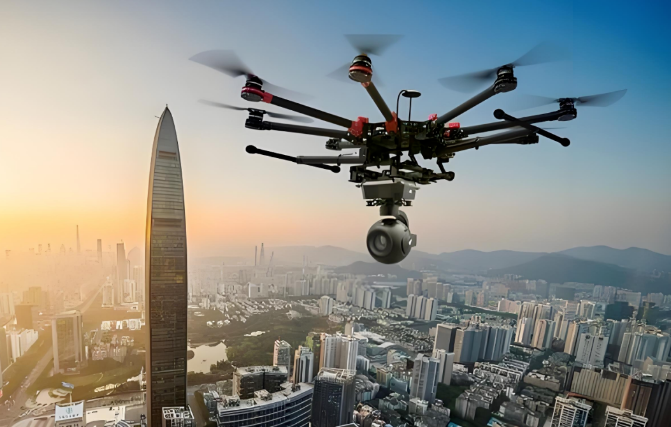
In a groundbreaking move that redefines emergency response, Shenzhen has launched China’s first drone-based Automated External Defibrillator (AED) delivery system. Dubbed “Air-Ground Integrated, Life First”, this innovative project aims to overcome traditional time and space limitations in emergency medical aid. The new system enables drones to deliver AEDs swiftly to individuals experiencing sudden cardiac arrest (SCA), significantly improving survival rates within the crucial golden rescue window.
A Game-Changer for Emergency Response
Traditional emergency response systems often face challenges such as traffic congestion, remote locations, and delays in ambulance dispatch. Recognizing these hurdles, Shenzhen has pioneered a high-tech solution that ensures AEDs reach patients in record time. Using a simple QR code scan, individuals can summon an AED-equipped drone, which autonomously takes off, follows a pre-set optimized route, and lands at the precise emergency location. This marks a national first in integrating drones into emergency medical services.
Smart Air Rescue Stations Across Shenzhen
To ensure the system’s effectiveness, Shenzhen has established five initial drone AED delivery stations across key public parks:
- Tanglangshan Country Park
- Phoenix Mountain Forest Park
- Shiyan Wetland Park
- Luotian Forest Park
- Fuhai River Park
Each park features 30 designated drone landing sites, creating an interconnected smart rescue network. Whether in urban centers or nature trails, the initiative is designed to reach victims in distress within five minutes, forming what experts call a “5-minute social rescue circle.”
How It Works: A Seamless Rescue Experience
In the event of an emergency, bystanders can simply scan a “Penguin Emergency” QR code located at designated AED access points. This action:
- Automatically dispatches a drone equipped with an AED and a first-aid kit
- Triggers the drone’s auto-takeoff, ensuring it navigates through the city using predefined rapid-response flight paths
- Delivers the equipment to the exact location, allowing rescuers to provide immediate aid while waiting for professional medical teams
This system significantly reduces the delay in defibrillation, a key factor in saving lives. For every minute without defibrillation, the survival rate of an SCA victim drops by 7-10%, making rapid response critical.
Shenzhen’s Vision: A Fully Integrated Emergency Network
While the project’s initial rollout is focused on public parks, Shenzhen plans to expand the network citywide. Future integration with the 120 emergency dispatch system will further enhance connectivity between public responders, hospitals, and drone delivery points. This seamless coordination aims to ensure that AEDs and medical assistance arrive as quickly as possible.
Paving the Way for a Smarter, Safer City
Shenzhen has long been recognized as China’s innovation hub, home to cutting-edge developments in AI, robotics, and smart city technology. This drone AED initiative is another testament to the city’s commitment to leveraging technology for public health and safety.
Experts believe that this system could serve as a model for cities worldwide, particularly in densely populated urban environments where traffic congestion often hampers emergency response times. By reducing dependence on traditional ambulance routes and embracing aerial mobility, Shenzhen is setting a new benchmark in urban healthcare solutions.
Public Response and Future Prospects
The initiative has received widespread praise from both medical professionals and the public. Dr. Li Ming, a Shenzhen-based cardiologist, emphasizes that rapid AED access is “the difference between life and death” for SCA patients. “This technology bridges the gap between the onset of an emergency and professional medical intervention, giving patients a fighting chance.”
Local residents, too, have expressed enthusiasm. “I feel much safer knowing that if something happens, help is just a scan away,” says Zhang Wei, a frequent jogger at Phoenix Mountain Forest Park.
Looking ahead, Shenzhen aims to integrate AI-driven medical assistance, expand coverage, and refine response accuracy. The city’s leadership envisions a future where technology-driven emergency solutions become the norm, ensuring safety and security for all residents.
Conclusion: Leading the Future of Smart Emergency Care
With this pioneering drone-based AED delivery system, Shenzhen is not only enhancing its emergency response infrastructure but also setting a precedent for smart healthcare solutions globally. This initiative proves that when technology and public health unite, the possibilities are limitless—and in Shenzhen, the future of emergency care has already taken flight.